




Comprehensive Clinical Research Ward for Brain Computer Interfaces
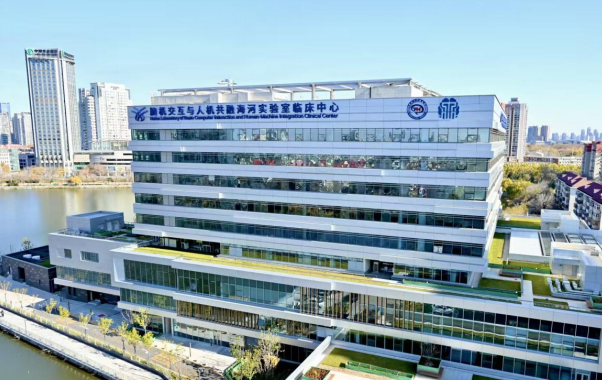
In March 2025, Tianjin Huanhu Hospital, together with Tianjin University and the Haihe Laboratory for Brain-Computer Interaction and Human-Computer Integration, began developing China's first comprehensive clinical research ward dedicated to brain-computer interfaces (BCIs).
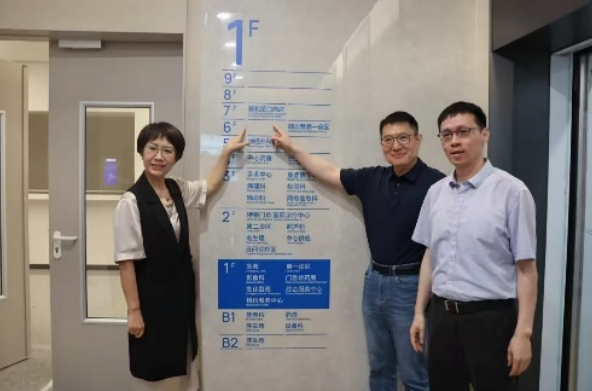
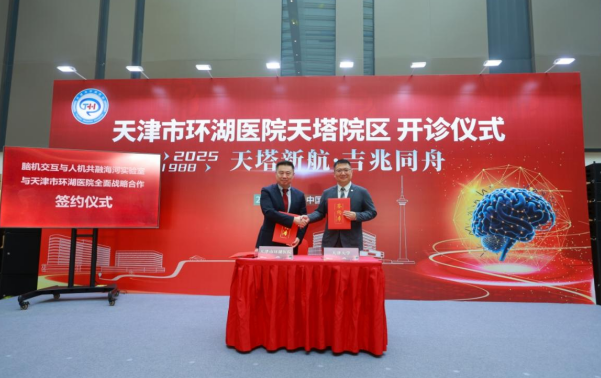
In October 2025, Tianjin Huanhu Hospital signed a cooperation agreement with Tianjin University and the Haihe Laboratory to deepen collaboration in scientific and technological innovation. The Clinical Center of the Haihe Laboratory for Brain-Computer Interaction and Human-Computer Integration was subsequently established at the Tianta Campus of Tianjin Huanhu Hospital, and the Comprehensive Clinical Research Ward for Brain-Computer Interfaces was formally inaugurated. In December 2025, Brain Science (Brain-Computer Interface) was approved as a National Key Clinical Specialty Development Project.
Ward Development
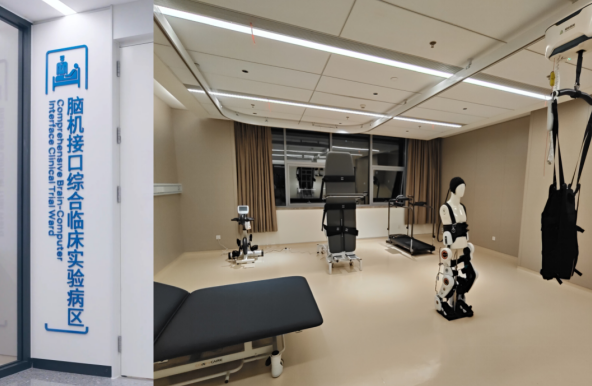
Developed in accordance with clinical research ward standards, the ward has a planned capacity of 31 beds. It focuses on clinical research and the translation of BCI technologies and includes dedicated facilities for EEG acquisition, rehabilitation assessment, experimental evaluation, and rehabilitation training. Its development plan also includes a pharmacy, refrigerated storage facilities, and a dedicated biospecimen-processing area.
These facilities will support both the clinical translation and evaluation of medical devices and clinical drug research, enabling an integrated model for drug and device research. This integration is an important part of the research-oriented hospital model, in which unmet clinical needs drive technological innovation and clinical translation.
The department has eight staff members: one with a senior professional title, five with intermediate professional titles, and two with junior professional titles. Two hold doctoral degrees, and two hold master's degrees. Through multidisciplinary collaboration, the team works closely with clinical, engineering, and research professionals to advance brain-computer interface medicine.
Systematic Innovation
The ward's work spans three areas: neurological disorders, talent development, and clinical translation. Its goals are to establish an innovative diagnostic and treatment system for neurological disorders, develop an interdisciplinary training platform, and build a nationally influential platform for technological innovation and clinical translation.
1 Comprehensive BCI Solutions for Neurological Disorders
The ward is developing integrated clinical BCI solutions for a broad range of neurological conditions, with particular emphasis on stroke, hydrocephalus, epilepsy, Parkinson's disease, Alzheimer's disease, cerebral palsy, traumatic brain injury, and visual and hearing impairments. Through disease-focused clinical research, the ward evaluates BCI technologies across different neurological conditions and stages of recovery.
2 Interdisciplinary Education and Talent Development
The ward trains clinicians in BCI technologies to support their use in diagnosis, treatment, and rehabilitation. It also offers university students and researchers opportunities to participate in clinical practice and translational research. Through collaboration between medicine and engineering, the program aims to train interdisciplinary professionals with expertise in both clinical medicine and engineering.
3 Clinical Translation and Integrated Innovation
Tianjin Huanhu Hospital, Tianjin University, the Haihe Laboratory, and industry partners are working together to build an integrated ecosystem for the clinical translation of BCI technologies. By linking clinical needs with scientific research, education, engineering development, and industrial application, the program aims to establish a reproducible and scalable model for research-oriented hospitals and to integrate clinical care, research, education, and industry.
Clinical and Technological Features
1 Brain Computer Interface Rehabilitation Clinic
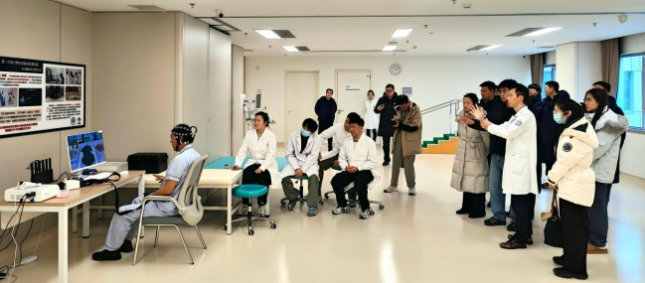
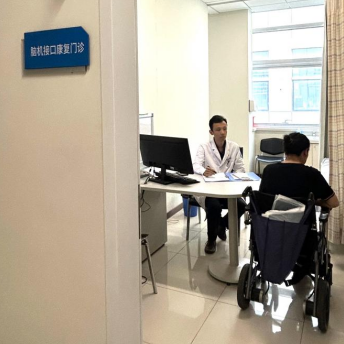
Since July 2025, the BCI Rehabilitation Clinic has provided clinical functional assessments and EEG-based motor imagery assessments. These assessments help identify patients most likely to benefit from BCI interventions and guide individualized rehabilitation strategies.
2 Shengong Lingdong
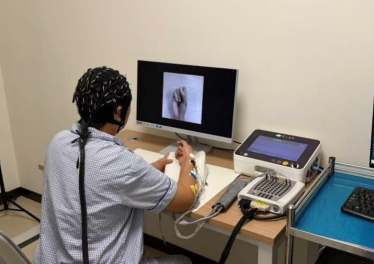
Shengong Lingdong focuses on restoring hand function. It combines individualized modulation strategies with high-precision functional electrical stimulation (FES) to support fine motor recovery and the reorganization of neural pathways. The system provides a new rehabilitation option for patients working to regain fine motor function in the upper limb.
3 Shengong Lingxi Finger
Shengong Lingxi Finger incorporates a brain-controlled wearable robotic exoskeleton. By combining BCI technology with a wearable design, the system enables active, brain-controlled motor training over a broader range and intensity of movement. Its goal is to increase neural activation and support functional reorganization during post-stroke rehabilitation.
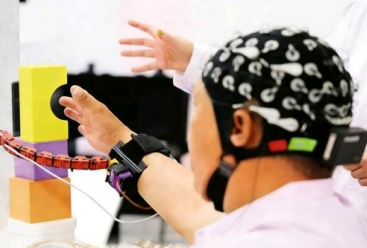
4 Shengong Shenjia
Shengong Shenjia integrates BCI technology, neuromuscular electrical stimulation, and a mechanical exoskeleton in one rehabilitation system. Its four main features are brain-controlled operation, lightweight design, system integration, and intelligent functionality. It provides an innovative platform for BCI-assisted neurological rehabilitation.
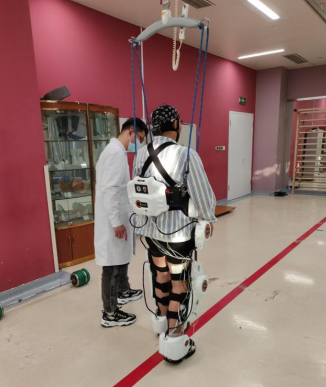
5 Multimodal BCI Rehabilitation Technologies
The ward also provides other BCI-assisted rehabilitation approaches, including real-time EEG analysis combined with hand-function training and real-time EEG analysis integrated with virtual reality (VR). These multimodal, individualized strategies expand treatment options for patients with limb motor dysfunction.
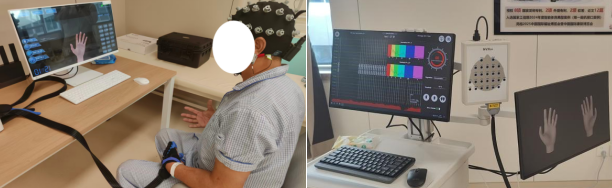
By integrating clinical neuroscience, BCI technology, rehabilitation medicine, biomedical engineering, and translational research, the ward is building a pathway from clinical needs and technology development to clinical validation and translational application. Its work advances innovative, individualized rehabilitation strategies for patients with neurological disorders.