



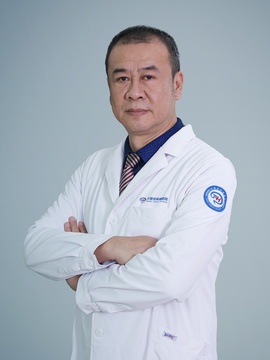

Craniocerebral Trauma and Neurocritical Care Center
The Craniocerebral Trauma and Neurocritical Care Center at Tianjin Huanhu Hospital is an interdisciplinary critical care center established in June 2022 through the integration of the hospital’s former Craniocerebral Trauma subspecialty of Neurosurgery and Department of Critical Care Medicine. With the management of severe traumatic brain injury (TBI) and neurocritical illness as its core areas of expertise, the Center integrates clinical care, nursing, education, research, quality control, and operational management, providing comprehensive and specialized care for patients with life-threatening neurological and neurosurgical conditions.
History and Development
The Craniocerebral Trauma Department of Tianjin Huanhu Hospital was designated the “Tianjin Craniocerebral Trauma Emergency and Treatment Center” in 1993 and was among the earliest centers in China to establish an independent specialty dedicated to the treatment of craniocerebral trauma. The team led by Professor DaShi Zhi received the Second Class Award of the National Science and Technology Progress Award for its contributions to this field. The department has also served as a principal committee-affiliated institution in the field of craniocerebral trauma within the neurosurgery branch of the Chinese Medical Association.
The hospital’s critical care specialty originated from a dedicated critical care unit established by Professor Jiatai Wang in 1999. Following the interdisciplinary integration of neurotrauma and critical care medicine, the newly established Center has preserved its longstanding expertise in severe brain injury and critical care while further developing a standardized and comprehensive system for the management of severe brain injury and a broad spectrum of neurocritical conditions. In recent years, the Center has also strengthened the integration of clinical practice with basic and translational research.
As a key clinical center established by Tianjin Huanhu Hospital through the concentration of its multidisciplinary expertise and medical resources, the Center brings together advanced medical technologies, an experienced multidisciplinary medical team, specialized nursing care, and high-level research and education, forming a comprehensive platform for neurotrauma and neurocritical care.
Clinical Team, Beds, and Research Resources
The medical team includes one nationally recognized neurosurgeon, five chief physicians and seven associate chief physicians in neurosurgery, as well as 14 critical care physicians, including three associate chief physicians. The Center is additionally supported by professional nursing and respiratory therapy teams.
The Center operates 55 neurointensive care unit (Neuro-ICU) beds, including 15 beds at the Tianta Campus and 40 beds at the Jizhao Campus. In addition, three specialized craniocerebral trauma wards are operated across the two campuses, including 12 intensive care beds.
The research team is supported by the Tianjin Neurosurgery Institute and its Craniocerebral Trauma Laboratory. The team includes one professor, one associate researcher, and three intermediate-level researchers, as well as one doctoral supervisor and three master’s supervisors, providing a strong foundation for clinical and translational research.
Clinical and Technical Expertise
Neurotrauma
The Center provides comprehensive surgical and multidisciplinary treatment for a broad spectrum of traumatic brain injuries and related neurosurgical pathologies. Its clinical expertise includes emergency and elective craniotomy for craniocerebral trauma, microscopic and endoscopic skull base repair and reconstruction, hybrid surgical procedures, management of complex hydrocephalus, repair and reconstruction of craniofacial bone defects, and treatment of neurosurgical infections.
The Center has also pioneered several techniques in Tianjin, including the clinical application of hypertonic saline for hyperosmolar therapy, selected unilateral surgical approaches for the management of contralateral cerebral contusions and lacerations across the falx, and the application of innovative materials for cranial defect reconstruction. Continuous technological innovation remains an important component of the Center’s clinical development.
Neurocritical Care
The Center specializes in the comprehensive management of acute and critically ill patients with neurological and neurosurgical disorders. Major conditions treated include severe intracranial hemorrhage secondary to traumatic brain injury, stroke and subarachnoid hemorrhage; massive cerebral infarction; severe cerebral edema; acute hydrocephalus; cerebral herniation; acute hypoxic-ischemic encephalopathy; and status epilepticus. The Center also provides perioperative neurocritical care, comprehensive management of critically ill patients with central nervous system disorders, and brain death assessment.
Key critical care techniques include intracranial pressure management, targeted temperature management (including mild therapeutic hypothermia when indicated), comprehensive airway management, mechanical ventilation, flexible bronchoscopy, continuous renal replacement therapy (CRRT), blood purification, image-guided placement of nasoenteric feeding tubes, central venous catheterization, and prone-position ventilation.
Multimodal Neuromonitoring
The Center has established a comprehensive system for multimodal monitoring and management of neurological function, incorporating invasive and noninvasive intracranial pressure monitoring, electroencephalographic (EEG) monitoring, pulse contour cardiac output (PiCCO) monitoring, point-of-care ultrasonography, and intra-abdominal pressure monitoring. The Center is also exploring the application of brain–computer interface (BCI) technologies in relevant areas of neurocritical care and neurological function assessment.
Core Strengths
A major strength of the Center is its extensive clinical experience and highly specialized multidisciplinary team for the comprehensive treatment of severe traumatic brain injury. Its neurocritical care program is guided by the concept of precise management of central nervous system function, providing continuous care throughout the disease course, from the acute critical stage to stabilization and recovery.
Clinical management focuses particularly on intracranial hypertension, targeted temperature management, recognition and control of seizures, analgesia and sedation, infection prevention and treatment, and systematic monitoring and management of complications. Through close multidisciplinary collaboration, the Center further integrates clinical medicine, biomedical engineering, and basic and translational research to address complex challenges in neurotrauma and neurocritical care.
Development Goals
The Center will continue to focus on the comprehensive treatment of critically ill neurosurgical patients, including those with traumatic brain injury, hemorrhagic stroke, brainstem hemorrhage, and malignant cerebral infarction, as well as patients with severe neurological disorders, including acute ischemic stroke, severe encephalitis, neuroimmunological emergencies, status epilepticus, and critical neuromuscular disorders.
Through continuous improvement in diagnostic and therapeutic capabilities and increasingly refined clinical management, the Center is committed to improving patient outcomes and reducing mortality and neurological disability associated with severe traumatic brain injury and neurocritical illness.
Building upon complex clinical challenges, multidisciplinary collaboration, and translational research, the Center aims to develop into a high-level professional center for craniocerebral trauma and neurocritical care, while fostering an integrated clinical, educational, and research team capable of advancing both patient care and scientific innovation.