
Tianjin Huanhu Hospital Successfully Completes the World Stroke Organization Advanced Stroke Center On-Site Assessment
To further promote the standardization, quality improvement, and international alignment of stroke diagnosis and treatment, and to benchmark its practices against internationally recognized standards and advanced approaches to stroke prevention and care, Tianjin Huanhu Hospital welcomed Professor Pandian, President of the World Stroke Organization (WSO), and Professor Li Shen, Secretary of the WSO China Center, on September 6, 2026, for an on-site assessment of its Advanced Stroke Center. Wu Jialing, Vice President of Tianjin Huanhu Hospital, attended the event and delivered welcoming remarks. The assessment meeting was chaired by Wei Ming, Director of the Department of Science and Education. Representatives from administrative departments, including the Medical Affairs Department, Hospital Administration Office, Information Technology Department, and Nursing Department, as well as diagnostic and therapeutic technology departments, including Emergency Medicine, Rehabilitation Medicine, Radiology, and Laboratory Medicine, participated throughout the assessment process.
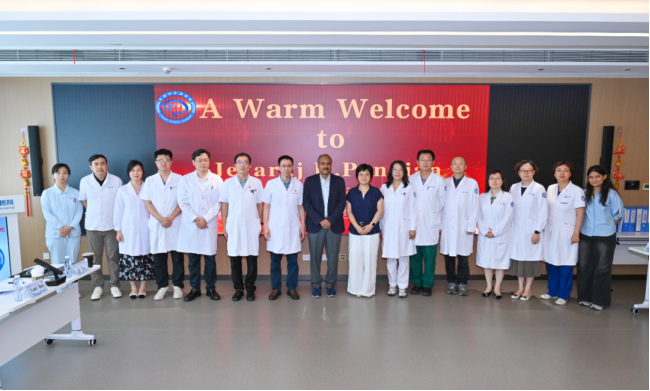
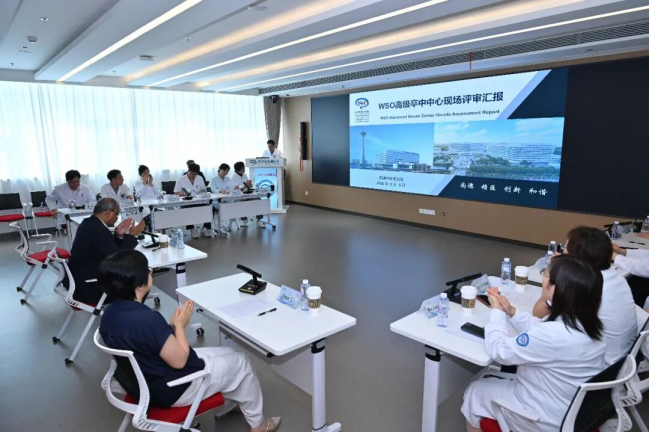
Round-table discussion
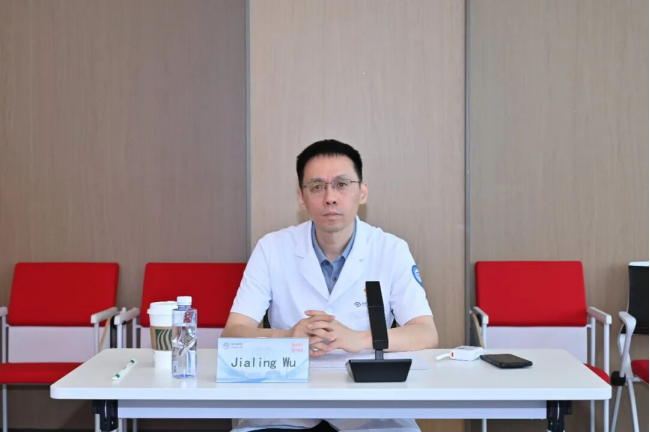
In his welcoming remarks, Vice President Wu Jialing extended a warm welcome to the visiting experts on behalf of Tong Xiaoguang, Secretary of the Hospital Party Committee and President of Tianjin Huanhu Hospital. He emphasized that the hospital has consistently placed great importance on stroke prevention and treatment, dedicating more than three decades to advancing stroke care. Leveraging the operational strengths of its two campuses, the hospital has integrated multidisciplinary medical resources, optimized its fast-track emergency stroke pathways, and established an integrated platform for stroke diagnosis and treatment. With more than 10,000 emergency stroke cases managed annually, the hospital has developed a comprehensive stroke prevention and care system covering the entire continuum of care, continuously strengthening regional stroke treatment capabilities.
Vice President Wu noted that this international assessment represents not only a comprehensive evaluation of the hospital's achievements in stroke center development but also a valuable opportunity to learn from international best practices and further advance its clinical specialties. He reaffirmed the hospital's commitment to fully supporting the assessment process, carefully considering expert recommendations, and using the evaluation as a catalyst for continuous improvement and institutional development, with the ultimate goal of establishing a high-level, internationally recognized center for stroke prevention and treatment.
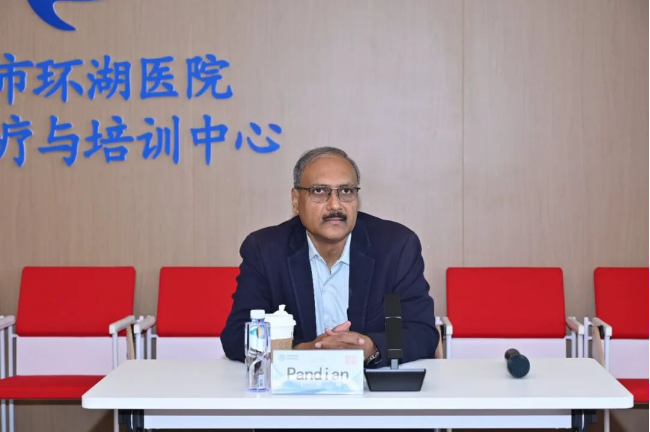
Professor Pandian provided an overview of the background and assessment framework of the World Stroke Organization (WSO) international certification program. He explained that the WSO, recognized by the World Health Organization (WHO), is a leading global authority in stroke prevention and care, dedicated to promoting standardized and consistent stroke management practices worldwide. Its comprehensive assessment framework encompasses the entire continuum of stroke care, including prevention, emergency response, diagnosis and treatment, rehabilitation, follow-up care, quality control, and scientific research, serving as an important international benchmark for evaluating stroke care capabilities. Professor Pandian expressed the WSO's hope that this assessment would provide an opportunity to deepen academic collaboration and support the hospital in aligning its practices with international standards to achieve high-quality development.
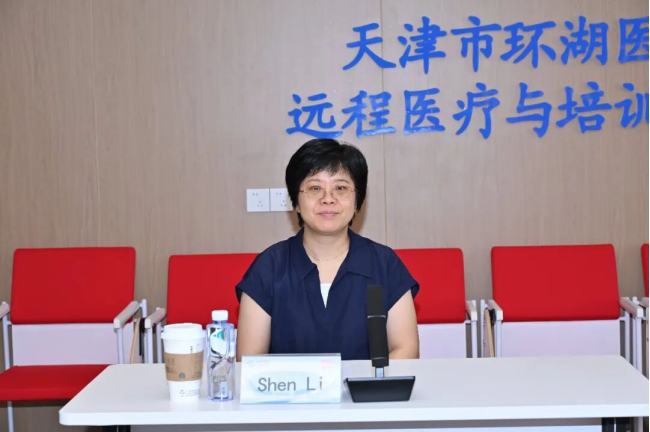
Professor Li Shen provided an overview of the WSO certification application and assessment process in China. She noted that a growing number of medical institutions across the country have initiated applications for WSO certification. She highlighted Tianjin Huanhu Hospital's strong foundation in specialized clinical care, its notable achievements in stroke center development, and its solid potential for further international advancement. Professor Li expressed her hope that the on-site assessment would help the hospital identify areas for improvement, incorporate international best practices, and further elevate the quality and standards of stroke prevention and care.
Following the introductory remarks, Vice President Wu Jialing delivered a comprehensive presentation on the development of the hospital's Stroke Center. His report covered the hospital's overall profile, the coordinated delivery of acute stroke treatment and rehabilitation services across its two campuses, the operational model of its one-stop Stroke Center, continuous optimization of fast-track stroke pathways, quality control and management, scientific research achievements, and the establishment of a regional stroke care quality control network. The presentation systematically highlighted the hospital's accomplishments and distinctive strengths across the continuum of stroke care, including prehospital screening, rapid and efficient in-hospital treatment, rehabilitation interventions, post-discharge follow-up, training in appropriate stroke care techniques for primary healthcare institutions, and public health education and awareness initiatives.
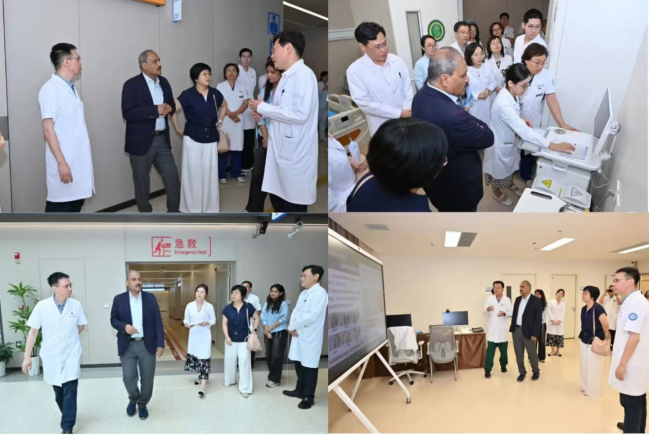
On-site inspection
Adhering to rigorous, professional, objective, and impartial international assessment standards, the expert review panel conducted comprehensive on-site inspections of key clinical areas, including the Emergency Department, Medical Imaging and Laboratory Medicine units, intravenous thrombolysis and mechanical thrombectomy areas, digital subtraction angiography (DSA) operating rooms, stroke wards, and brain-computer interface wards. The panel thoroughly evaluated emergency care infrastructure, the practical implementation of fast-track stroke pathways, the performance of on-duty medical and nursing staff, the operational status of diagnostic and therapeutic equipment, and compliance with established quality control protocols. The experts also carefully reviewed key time-sensitive performance indicators for acute stroke management, examined clinical records of intravenous thrombolysis and endovascular interventions, and engaged in face-to-face discussions with frontline healthcare professionals. Through this comprehensive, multidimensional assessment, the panel evaluated the hospital's adherence to standardized stroke care practices and the development of its integrated stroke management system across the entire continuum of care.
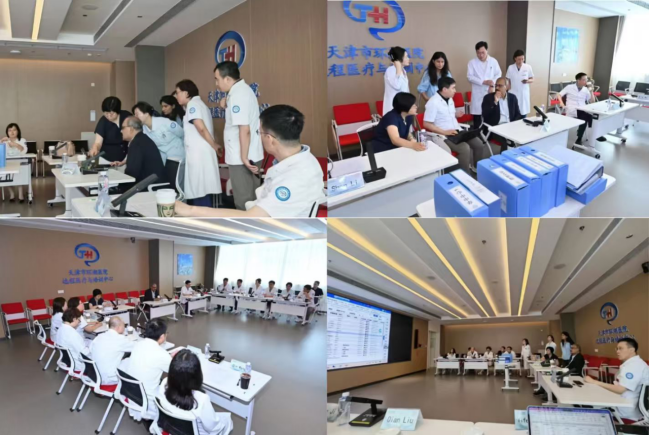
Data verification
During the data verification phase, the expert review panel conducted an on-site review of stroke patients’ medical records, systematically examining key time points in acute stroke management, documentation of intravenous thrombolysis and endovascular interventions, the stroke patient registry database, and relevant quality performance indicators. Particular emphasis was placed on verifying the authenticity, completeness, and accuracy of time-sensitive performance metrics for fast-track stroke pathways and clinical data. This rigorous review provided a comprehensive evaluation of the hospital’s Stroke Center development and its adherence to established standards of stroke care.
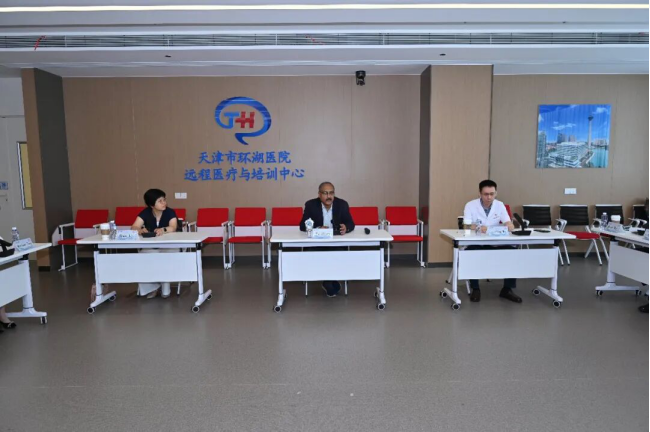
Feedback and guidance
During the feedback session, the expert review panel commended the hospital for its coordinated stroke care model across two campuses, efficient and streamlined fast-track emergency stroke pathways, excellent time-sensitive treatment performance indicators, routine multidisciplinary quality control and management, and targeted early rehabilitation interventions. The panel also highly recognized the effectiveness of the hospital's comprehensive stroke prevention and care system, which integrates services across the entire continuum of care.
Drawing on the latest international standards and best practices in stroke management, the experts identified areas requiring further improvement and outlined priorities for optimization. They provided targeted recommendations on refining clinical workflows, standardizing the development and management of clinical databases, strengthening multidisciplinary collaboration, accelerating the translation of research findings into clinical practice, establishing sustainable patient education and public health awareness programs, and institutionalizing ongoing support for primary healthcare facilities. These recommendations provided a clear roadmap for advancing the hospital's Stroke Center toward greater international alignment, more refined clinical management, and higher standards of care.
The WSO Advanced Stroke Center assessment represents not only an important step in aligning Tianjin Huanhu Hospital with international standards for stroke diagnosis and treatment, but also an authoritative international evaluation of its achievements in stroke center development. Achieving WSO Advanced Stroke Center certification is not the ultimate goal, but rather a new starting point for continued high-quality development. Moving forward, the hospital will further strengthen its comprehensive capabilities in stroke prevention, treatment, and management, striving to establish itself as a nationally leading, internationally aligned center of excellence in stroke care and research. Through these sustained efforts, Tianjin Huanhu Hospital remains committed to meeting the healthcare needs of patients in Tianjin and surrounding regions, safeguarding public health and well-being, and contributing to the hospital's continued high-quality development.