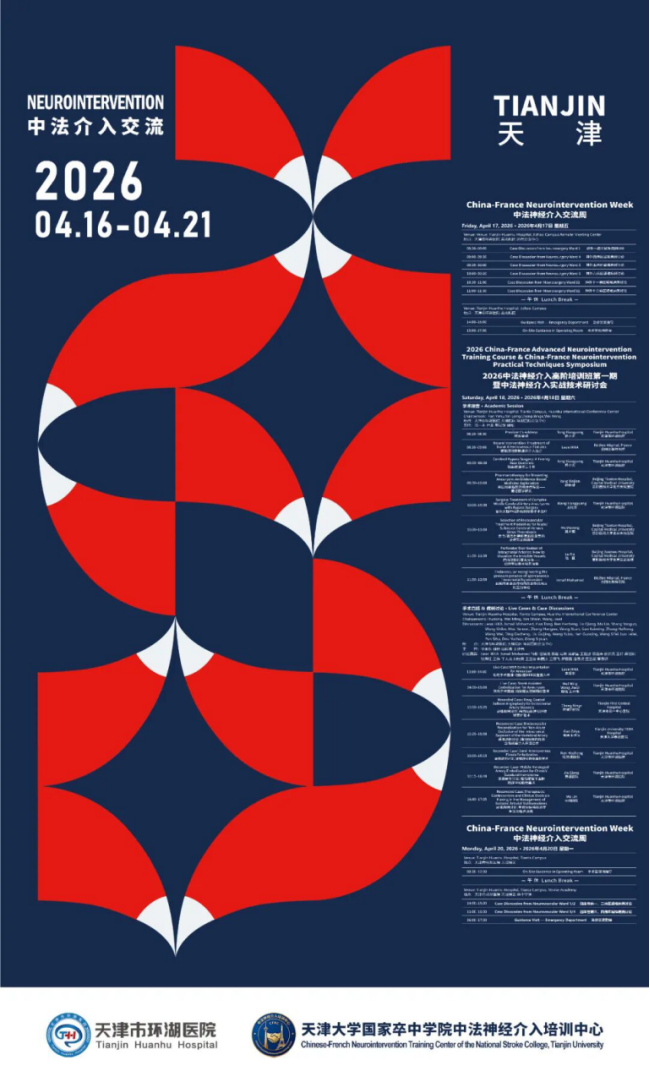
( Part 2)2026 China–France Neurointerventional Exchange Week & the Inaugural Session of the 2026 China–France Advanced Neurointerventional Training Program and Hands-on Technical Workshop Successfully Held!
02 China–France Neurointerventional Exchange Week: Training and Academic Exchange at the Jizhao Campus

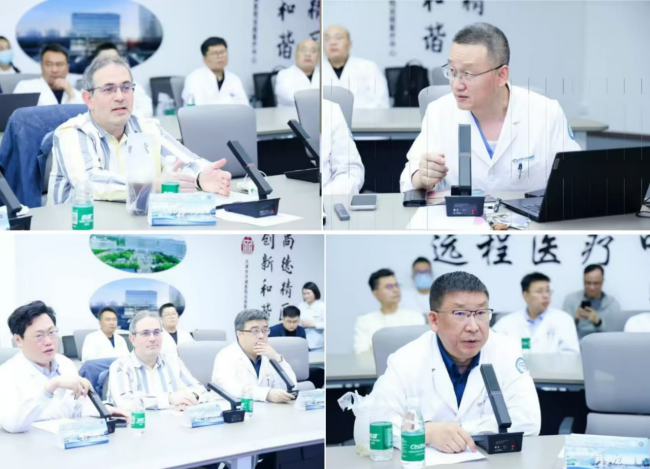
On the morning of April 17, a clinical case discussion session was successfully held at the Telemedicine Center of the Jizhao Campus of Tianjin Huanhu Hospital as part of the China–France Neurointerventional Exchange Week. Professor Yin Long from Tianjin Huanhu Hospital opened and chaired the session, outlining its primary objectives: to address challenging clinical cases, exchange diagnostic and therapeutic perspectives, draw on advanced international experience, and promote standardized clinical management.
The session featured engaging discussions and valuable clinical insights. Physicians from Tianjin Huanhu Hospital, including Ren Hecheng, Shang Yanguo, Wang Wei, Dou Yuchao, Zhai Pengfei, and Li Qi, presented a series of challenging cases involving cervical spinal dural arteriovenous fistulas, recurrent intracranial aneurysms, idiopathic intracranial hypertension complicated by cerebrospinal fluid rhinorrhea, wide-necked basilar tip aneurysms, spinal vascular malformations, and postoperative complications following sacral tumor surgery.
Drawing on individual cases, the presenting physicians provided detailed accounts of diagnostic assessments, treatment planning, key surgical techniques, and the challenges encountered throughout clinical management. Their presentations demonstrated the hospital's strong clinical expertise and rigorous approach to diagnostic and therapeutic decision-making.Following each case presentation, Professor Leon Ikka from Hôpital Bicêtre, France, provided expert commentary and individualized guidance. With professional interpretation by Dr. Dong Siyuan from Tianjin Huanhu Hospital, Professor Ikka offered valuable recommendations based on contemporary European clinical practices and treatment standards. In-depth discussions addressed areas of clinical controversy and opportunities for optimizing treatment strategies, broadening participants' perspectives on the management of complex neurovascular conditions.
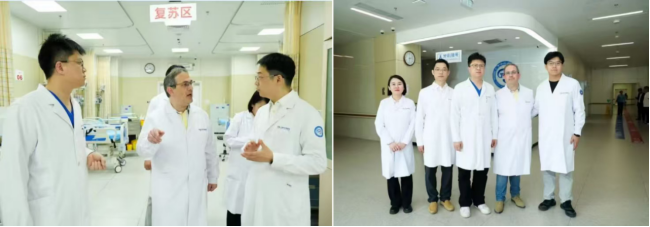
On the afternoon of April 17, the exchange program shifted its focus to practical clinical training and on-site guidance. Professor Leon Ikka led participants on a visit to the Emergency Department at the Jizhao Campus of Tianjin Huanhu Hospital. Accompanied by Associate Chief Physician Ji Xiang, he gained an in-depth understanding of the department's diagnostic and treatment pathways for neurovascular emergencies, as well as its emergency management protocols. Drawing on his extensive clinical experience, he offered constructive recommendations for further optimizing emergency care.
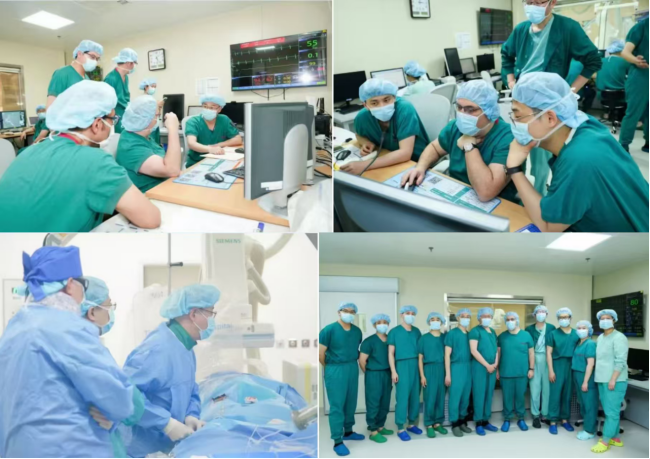
The expert delegation subsequently visited the operating rooms for on-site surgical guidance, engaging in detailed discussions with the surgical teams on operative techniques and the optimization of treatment strategies for challenging cases.
03 China–France Neurointerventional Exchange Week: Training and Academic Exchange at the National Stroke Academy and Tianta Campus
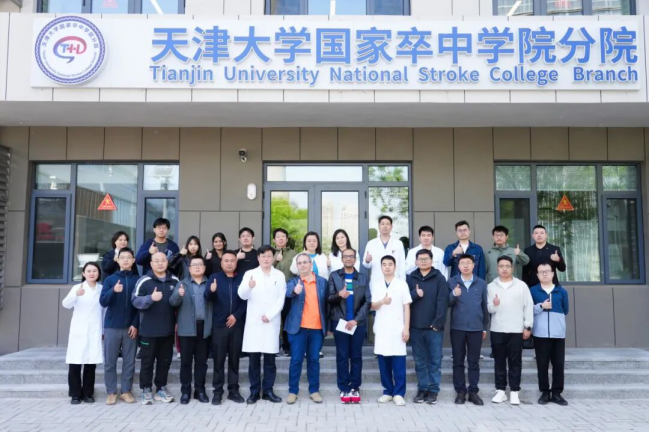
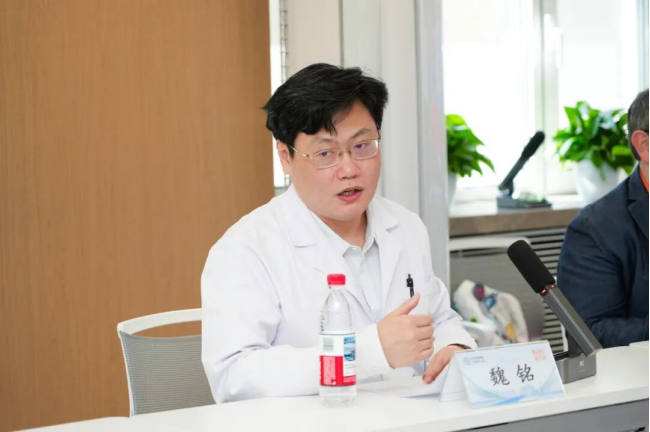
On April 20, the China–France Neurointerventional Exchange Week continued with a series of academic activities held in the second-floor conference room of the Tianjin Branch of the National Stroke Academy, Tianjin University. The session opened under the chairmanship of Professor Wei Ming from Tianjin Huanhu Hospital.
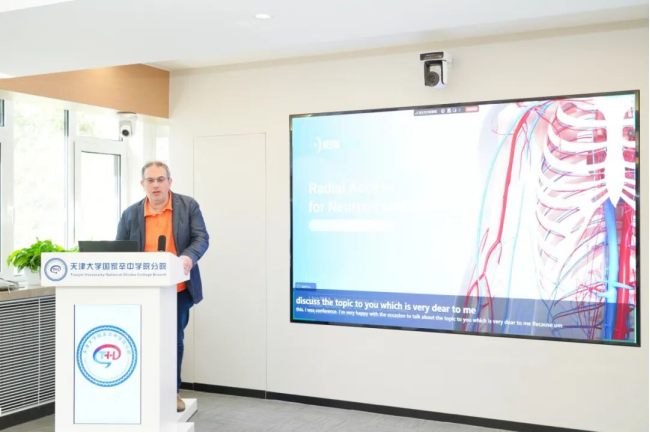
Professor Leon Ikka from Hôpital Bicêtre, France, delivered a lecture entitled “Transradial Access: Why and How?” Drawing on his extensive clinical experience, he provided a detailed explanation of the technical aspects, indications, and advantages of the transradial approach, offering valuable guidance for the standardized application of this technique in clinical practice.
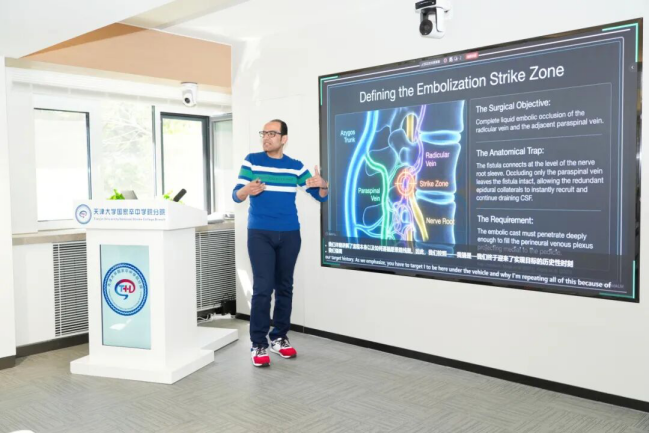
Professor Ismail Mohamed presented a lecture entitled “Postprocedural Complications and Their Management Following Cerebrospinal Fluid–Venous Fistula Embolization.” His presentation systematically addressed strategies for preventing complications, key considerations for their early recognition, and appropriate emergency management protocols. The lecture provided practical clinical insights and valuable guidance for managing complications associated with this specialized neurointerventional procedure.
Following the theoretical presentations, the program transitioned to a hands-on training session. Professors Leon Ikka and Ismail Mohamed personally supervised neurointerventional simulator-based training, providing individualized guidance in realistic simulated procedural scenarios. They highlighted critical procedural steps and common technical pitfalls, offering step-by-step instruction to help participants develop standardized operative techniques. Through this interactive training, participants were able to translate theoretical knowledge into practical skills, further enhancing their procedural proficiency, technical precision, and adherence to standardized neurointerventional practices.
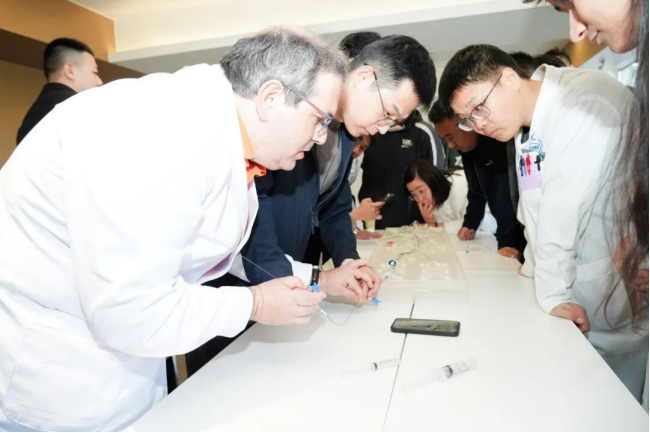
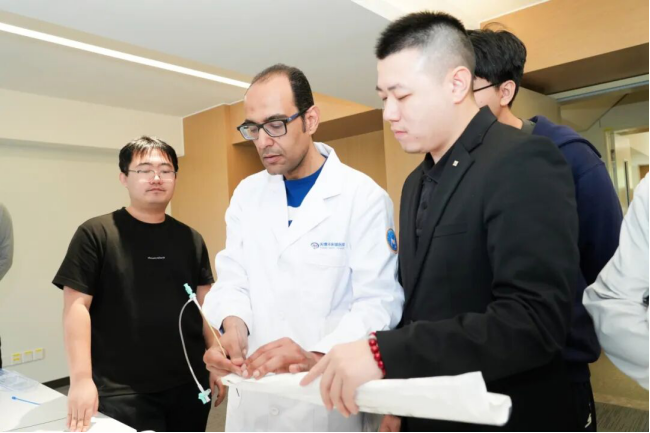
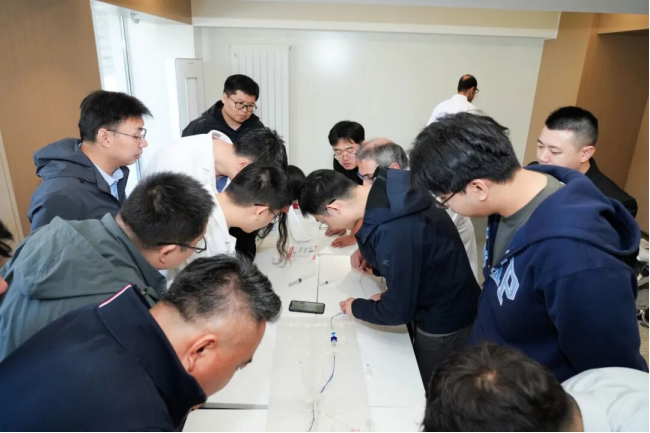
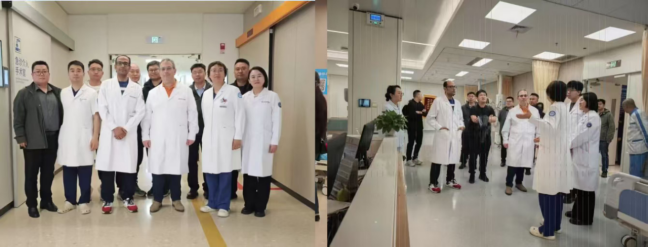
Following the hands-on training session, Professors Leon Ikka and Ismail Mohamed led participants on a visit to the Emergency Department at the Tianta Campus of Tianjin Huanhu Hospital. Accompanied by Chief Physician Guan Yalin from the Emergency Department, the visiting experts toured the facilities and provided on-site clinical guidance.
Tianjin's spirit of openness and inclusiveness has fostered the convergence of cultures and traditions, while a shared passion for neurointervention continues to unite medical professionals across borders in pursuit of common aspirations.
The successful hosting of the 2026 China–France Neurointerventional Exchange Week and the Inaugural Session of the 2026 China–France Advanced Neurointerventional Training Program and Hands-on Technical Workshop represents an important step in Tianjin Huanhu Hospital's efforts to deepen international academic collaboration and strengthen its overall clinical, educational, and research capabilities.
Looking ahead, the China–France Neurointerventional Training Center will continue to develop a dynamic platform for international academic exchange, regularly organizing reciprocal expert visits, technical workshops, hands-on training programs, and collaborative educational activities. Through these initiatives, the center aims to advance the quality of neurointerventional diagnosis, treatment, and medical education, contributing the combined expertise and innovation of China and France to the global development of neurointerventional medicine.
At the same time, Tianjin Huanhu Hospital remains committed to safeguarding cerebrovascular health through increasingly advanced medical technologies, promoting the high-quality development of neurointerventional medicine, and contributing to Tianjin's ambition to become a leading medical hub in northern China, while further strengthening the city's international influence in healthcare.