( Part 1)2026 China–France Neurointerventional Exchange Week & the Inaugural Session of the 2026 China–France Advanced Neurointerventional Training Program and Hands-on Technical Workshop Successfully Held!
On the shores of the Bohai Sea and along the banks of the Haihe River, the Inaugural Session of the 2026 China–France Advanced Neurointerventional Training Program and Hands-on Technical Workshop was successfully held in Tianjin, China, on April 17–18, 2026. Organized by the Tianjin Society for Precision Medicine and jointly hosted by Tianjin Huanhu Hospital and the China–France Neurointerventional Training Center of the Tianjin Branch of the National Stroke Academy, Tianjin University, the event brought together leading experts in neurointervention from China and France. In conjunction with the workshop, the 2026 China–France Neurointerventional Exchange Week was held from April 16 to 21, 2026, with activities taking place at the Tianjin Branch of the National Stroke Academy, Tianjin University, and on both campuses of Tianjin Huanhu Hospital.
The exchange week and workshop featured distinguished international experts, including Professor Jacques Moret, former President of the World Federation of Interventional and Therapeutic Neuroradiology (WFITN), and his team; Professor Laurent Spelle, Professor of Radiology at Université Paris-Saclay, Head of the Department of Neuroradiology at Hôpital Bicêtre, and an internationally renowned expert in neurointervention, together with his team; Professor Leon Ikka; and Professor Ismail Mohamed.
Alongside leading Chinese experts, the distinguished guests focused on three key themes: refinement of surgical strategies, clinical translation of innovative medical devices, and integration of technical concepts and approaches. The program featured live neurointerventional procedures with hands-on teaching, complex case discussions, and thematic scientific sessions, fostering knowledge exchange, mutual learning, and professional collaboration among the next generation of neurointerventional physicians from China and France.
01 China–France Neurointerventional Exchange Week: Inaugural Session of the 2026 China–France Advanced Neurointerventional Training Program and Hands-on Technical Workshop
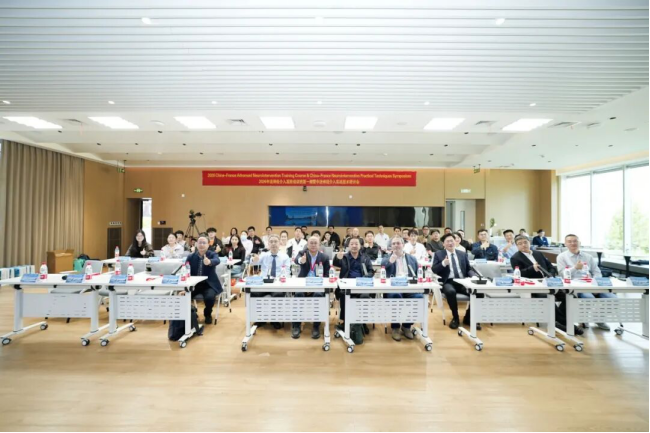
The Inaugural Session of the 2026 China–France Advanced Neurointerventional Training Program and Hands-on Technical Workshop commenced with opening remarks by Professor Yin Long, Academic Advisor to the China–France Neurointerventional Training Center and a neurosurgical expert at Tianjin Huanhu Hospital, marking the beginning of an engaging program of academic exchange.
The conference was co-chaired by Professor Chang Binge from the Department of Neurosurgery at Tianjin First Central Hospital, together with Professors Yin Long and Wei Ming from the Department of Neurosurgery at Tianjin Huanhu Hospital.
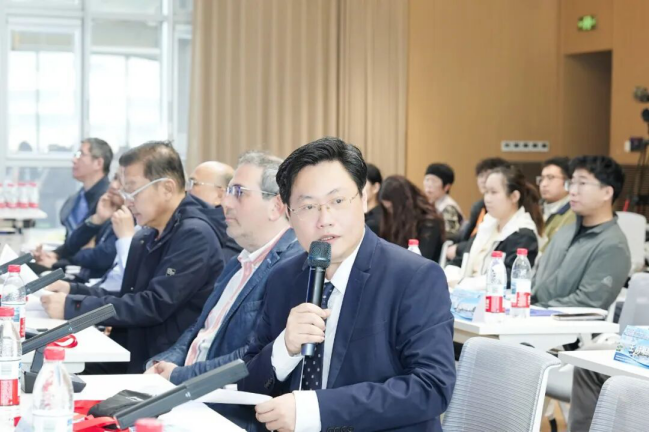
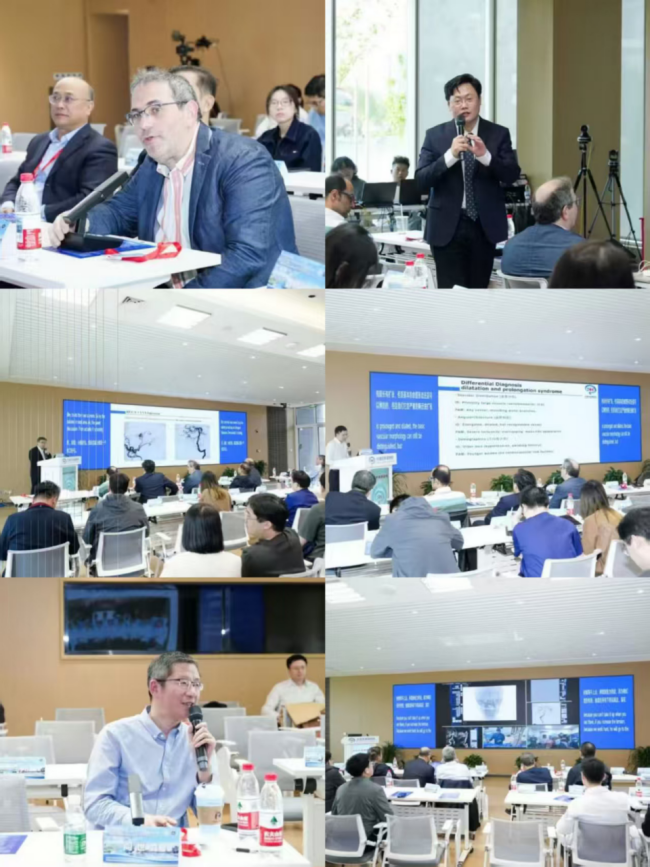
The morning scientific session featured a series of insightful presentations highlighting cutting-edge advances and practical clinical expertise in neurointervention.
Professor Leon Ikka from Hôpital Bicêtre, France, opened the session with a comprehensive lecture on the endovascular treatment of dural arteriovenous fistulas. Professors Yang Xinjian and Mo Dapeng from Beijing Tiantan Hospital, Capital Medical University, subsequently delivered evidence-based presentations on pharmacological management of dissecting aneurysms and endovascular treatment strategies for cerebral venous sinus thrombosis, respectively.
Professor Wang Hongguang and Professor Wei Ming from Tianjin Huanhu Hospital presented on surgical revascularization using bypass techniques for complex middle cerebral artery lesions and emerging research on pNTMA hemocompatible coatings for flow-diverting devices, respectively. Professor Lu Xia from Xuanwu Hospital, Capital Medical University, provided a detailed analysis of key techniques for precise angiographic visualization of intracranial perforating arteries.
Professor Ismail Mohamed from France concluded the session with a presentation addressing the diagnostic and therapeutic challenges of spontaneous intracranial hypotension, with a particular focus on endovascular reconstruction strategies and advanced international approaches to clinical management.
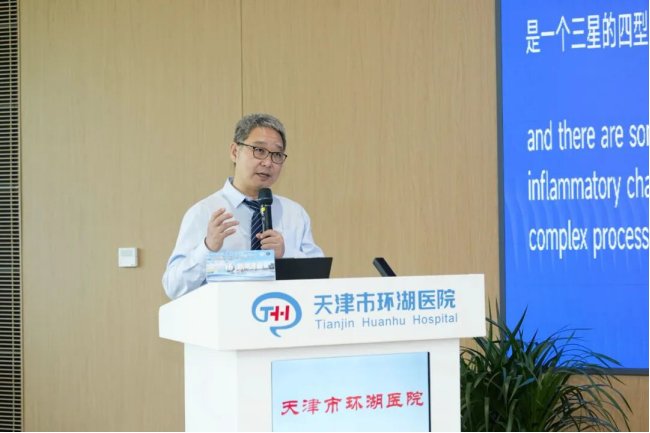
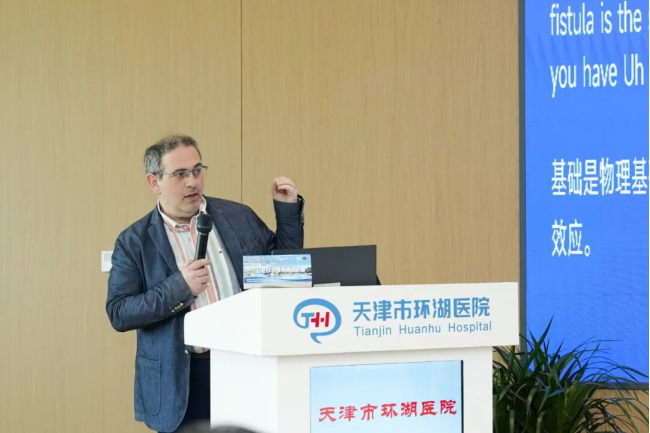
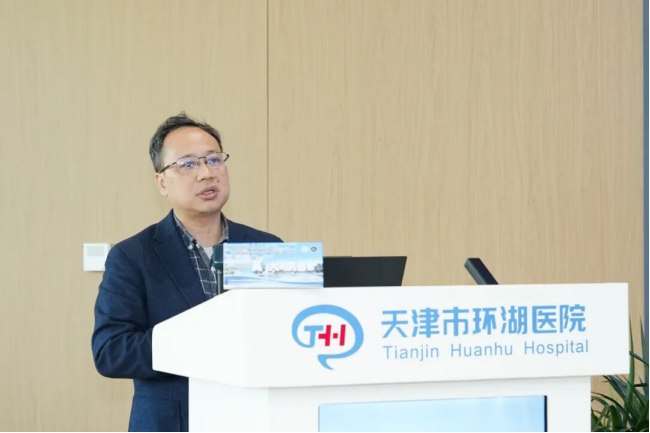
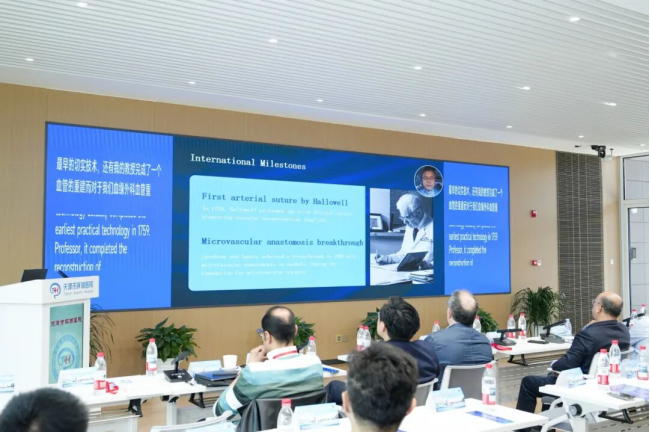
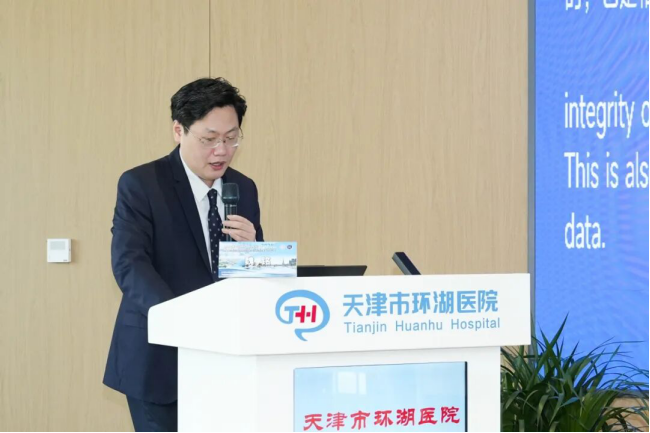
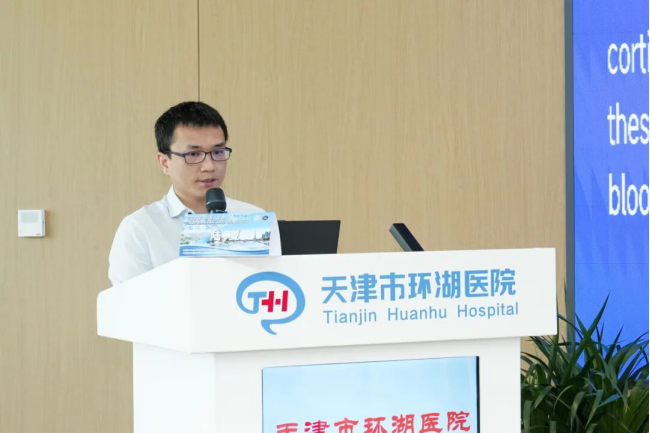
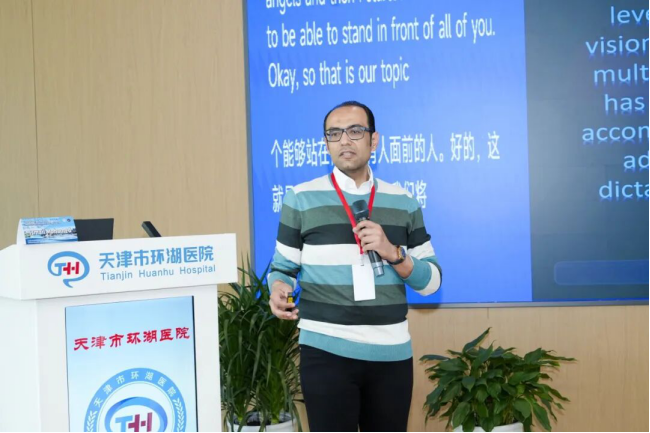
The afternoon session, co-chaired by Professors Yan Shixin and Wei Ming from Tianjin Huanhu Hospital, focused on practical clinical applications, featuring immersive live surgical demonstrations and in-depth discussions of challenging cases.
Professor Leon Ikka from Hôpital Bicêtre, France, and Professor Li Xudong from Tianjin Huanhu Hospital provided live procedural guidance and demonstrations of WEB (Woven EndoBridge) device implantation for intracranial aneurysms. Professors Wei Ming and Wang Jiwei from Tianjin Huanhu Hospital delivered expert demonstrations of stent-assisted aneurysm embolization, showcasing standardized procedural techniques and well-structured clinical decision-making that provided participants with valuable hands-on learning opportunities.
Expert teams led by Professor Chang Binge from Tianjin First Central Hospital and Professor Guo Zaiyu from Tianjin University TEDA Hospital, together with specialists including Ren Hecheng, Jia Qiang, and Ma Lin from Tianjin Huanhu Hospital, conducted comprehensive case reviews and multidisciplinary discussions covering a range of complex neurovascular conditions. Topics included drug-coated balloon angioplasty for intracranial arterial stenosis, endovascular recanalization of chronic occlusions of the intracranial vertebral artery, embolization of dural arteriovenous fistulas, endovascular treatment of chronic subdural hematomas, and controversies surrounding the diagnosis and management of cerebral arteriovenous malformations.
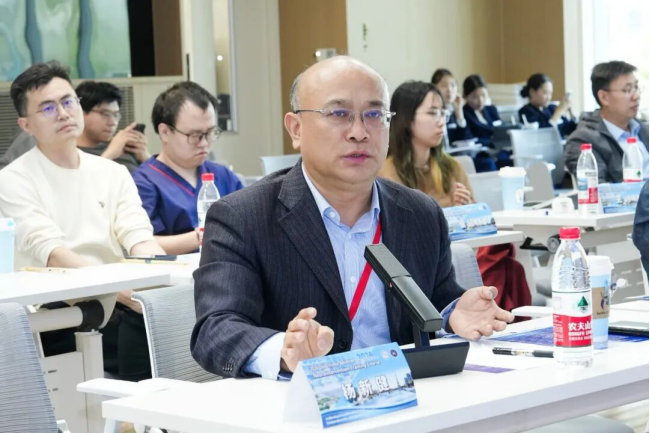
The participating experts exchanged perspectives and engaged in lively academic discussions on key issues, including the selection of surgical and endovascular approaches, prevention and management of procedural complications, individualized clinical decision-making, and the clinical application of emerging neurointerventional devices. The session fostered a dynamic and intellectually stimulating atmosphere, encouraging meaningful exchanges of clinical experience, technical expertise, and innovative treatment strategies.