
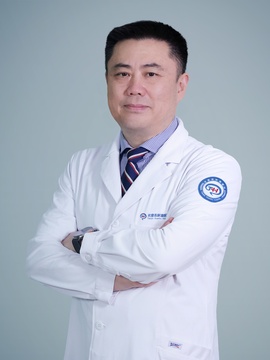
Member, 9th Executive Committee, Neurosurgery Branch, Chinese Medical Association
Standing Committee Member, Neurosurgery Branch, Chinese Medical Doctor Association
Vice Chair, 5th Executive Committee, Microsurgery Committee, Tianjin Medical Association
Associate Editor, Chinese Journal of Neurosurgery
Editor-in-Chief, Chinese Journal of Contemporary Neurology and Neurosurgery
Professor Tong specializes in the multimodal diagnosis and treatment of complex neurosurgical diseases, integrating advanced microsurgical techniques, endoscopic skull-base surgery, cerebral revascularization, and neuroendovascular intervention. He has extensive expertise in both microsurgical and endovascular treatment of complex giant and dissecting intracranial aneurysms involving the anterior and posterior circulations, and is highly experienced in a wide range of intracranial, deep-seated, and high-flow bypass procedures for the management of complex cerebrovascular diseases.
Professor Tong has pioneered a number of innovative cerebral revascularization techniques. His work in extracranial-intracranial bypass and cerebral blood flow reconstruction for posterior circulation ischemic cerebrovascular disease represents a major area of clinical and academic expertise.
By integrating skull-base microsurgery, endoscopic techniques, and cerebral revascularization, Professor Tong and his team have developed comprehensive surgical strategies for complex skull-base tumors, including recurrent and challenging lesions involving the cavernous sinus, foramen magnum, and jugular foramen. The team has also innovatively combined microsurgical and endoscopic approaches with high-flow extracranial-intracranial bypass techniques for the treatment of invasive benign and malignant tumors involving the central skull-base.
Their surgical innovations and clinical research findings have been published in top-tier international neurosurgical journals, including Operative Neurosurgery and Neurosurgical Review. Commissioned by the National Health Commission of China, Professor Tong’s team took part in drafting the Guidelines for Cerebrovascular Bypass Surgery and developed a standardized training program for carotid endarterectomy. The Laboratory of Microneurosurgery and Endoscopic Skull-Base Surgery at the Center has been accredited as an outstanding neurosurgical training center by the Chinese Medical Doctor Association.
Professor Tong and his team have built academic and research partnerships with top neurosurgical institutions at home and abroad, including Peking Union Medical College Hospital, Beijing Tongren Hospital, Shenzhen People’s Hospital and Stanford University (USA). The team launched the Peking Union-Huanhu-Tongren Joint Anatomy Course and provided support for the founding of the Shenzhen Neurosurgical Technology Training and Innovation Center (Stanford University Branch), promoting the advancement and global dissemination of microneurosurgical anatomy and high-level neurosurgical training.